A Hong Kong food guide should help you eat well without getting lost in endless options or falling into tourist traps. This article solves the practical problems travelers face: too many choices, unfamiliar dishes, long queues at the wrong places, and budgets that vanish fast. You will learn what to eat, where to find it, and how to make smart decisions from your first day.
Hong Kong’s food culture blends Cantonese tradition with international influences, creating a landscape where street stalls sit beside luxury restaurants and old teahouses coexist with modern cafes. The challenge is not a lack of options but knowing which ones are worth your time and money. This hong kong food guide gives you a clear framework to navigate the city’s dining scene with confidence, whether you have three days or two weeks.
What should you know before eating in Hong Kong?
Understanding a few basics will save you time, money, and confusion. First, Hong Kong people treat meals as events worth rushing for — lunch crowds appear at 12 sharp, and dinner service starts early. Arriving at off-peak times like 11:30 AM or 6 PM helps you avoid the worst queues. Second, many local restaurants are cash-only or have minimum card spending requirements, so always carry small bills. Third, tipping is not expected and can even cause confusion, so simply pay the stated price.

Food safety standards are generally high across all price levels, from dai pai dongs to hotel restaurants. The city enforces strict hygiene regulations, so even modest street vendors operate under inspection. However, during summer months, raw seafood dishes carry slightly higher risk, so cooked preparations are safer choices for sensitive stomachs. Additionally, many establishments close for a week or two during Chinese New Year, so checking dates before your trip prevents disappointment.
What are the essential dishes you cannot afford to skip?
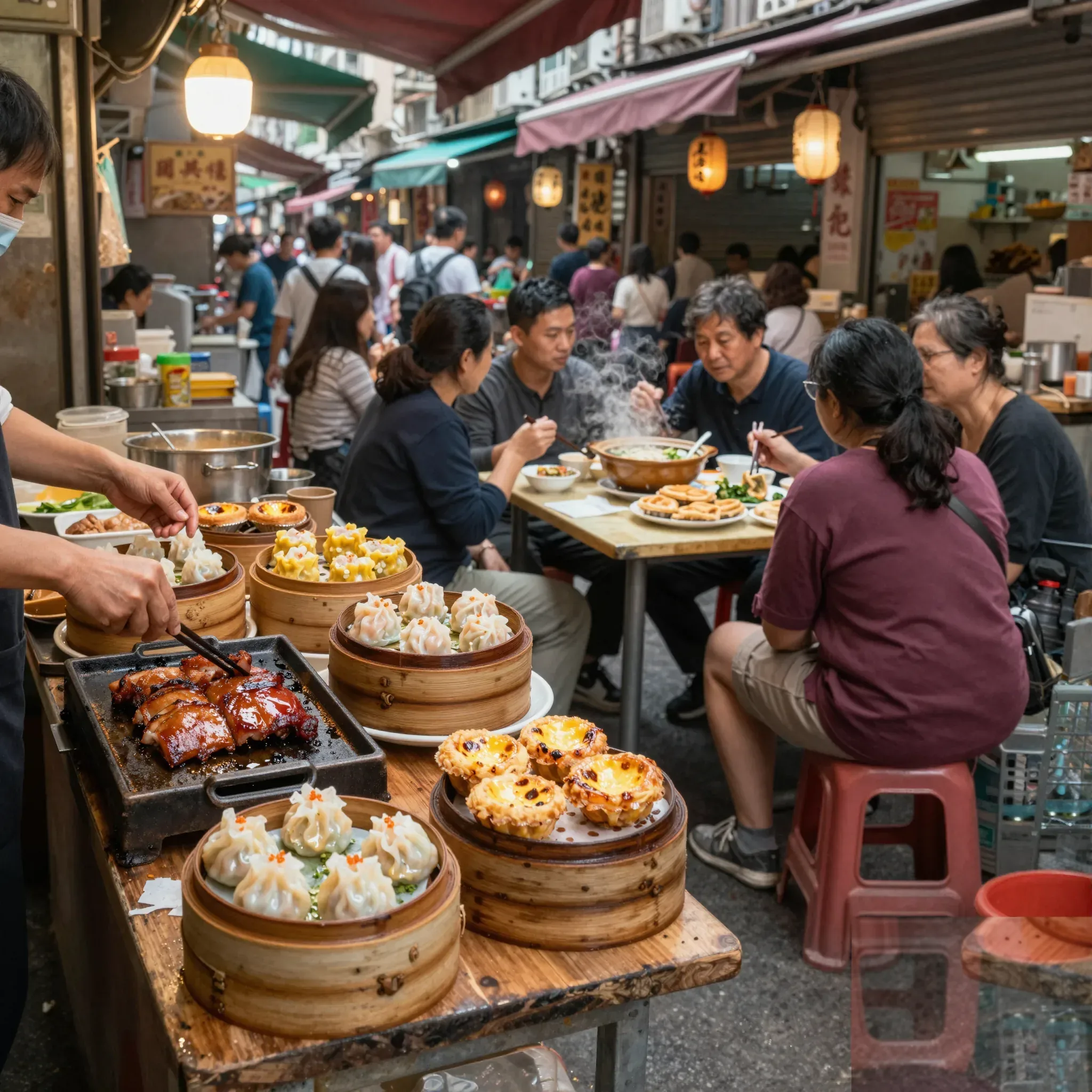
Every Hong Kong food guide highlights certain dishes because they represent the city’s culinary identity. Char siu, the caramelized BBQ pork, appears everywhere from roast meat shops to fine dining. Wonton noodle soup, with its springy egg noodles and plump shrimp-filled dumplings in clear broth, remains a benchmark of Cantonese simplicity. Roast goose, served with crispy skin and tender meat alongside plum sauce, represents one of the city’s most celebrated specialties.
Dim sum deserves its own mention because it is not a single dish but a complete dining experience. Har gow (shrimp dumplings), siu mai (pork and shrimp dumplings), cheung fun (rice noodle rolls), and egg tarts form the core ordering guide for any first-time visitor. Egg waffles, a street snack with a honeycomb pattern, offer a sweet break between meals. Meanwhile, claypot rice, served bubbling hot with preserved meats or chicken, provides a hearty and satisfying dinner option that showcases Hong Kong’s comfort food tradition.

How do you find authentic local food without getting trapped by tourist spots?
The biggest problem for visitors is ending up at places designed for tourists rather than locals. The solution lies in targeting neighborhoods where residents actually eat. Areas like Sham Shui Po, Jordan, and Causeway Bay host thousands of working-class restaurants where quality stays high and prices remain reasonable. Avoid the immediate vicinity of major tourist landmarks, where menus are translated into five languages and portions shrink while prices climb.
Look for these indicators of authenticity: a handwritten menu, Cantonese being the primary language spoken, crowded tables during local meal times, and restaurants that specialize in one or two dishes rather than offering everything. Dai pai dongs, open-air food stalls, serve some of the best cheap eats in the city, though they have become rarer due to licensing restrictions. Similarly, cha chaan tengs — local diners serving Hong Kong-style milk tea, toast, and noodles — offer a cultural experience alongside affordable meals. For seafood, head to Sai Kung or Lei Yue Mun, where fishing villages provide the freshest catches at market prices.
How do you manage your food budget across a full trip?
Hong Kong dining ranges from extremely cheap to shockingly expensive, and managing your budget requires planning. Street snacks like fish balls, stinky tofu, and egg waffles cost under fifty Hong Kong dollars and fill gaps between meals. Noodle shops and rice plate restaurants typically charge between fifty and one hundred dollars for a filling lunch. For dinner, local restaurants offering set menus or daily specials provide better value than ordering à la carte from extensive menus.
Consider this practical budgeting approach: allocate your dining funds across three tiers each day. Breakfast at a cha chaan teng costs roughly thirty to fifty dollars. Lunch at a roast meat or wonton noodle shop runs fifty to eighty dollars. Dinner is where you should spend more — perhaps one hundred fifty to two hundred fifty dollars at a quality local restaurant. This structure gives you two affordable meals and one memorable experience daily, keeping your total food budget manageable while still enjoying the city’s best offerings.