
If you’re planning a trip to Quanzhou and wondering whether Huangshi is worth your time, here’s the short answer: yes, but only if you know exactly where to go and what to expect. Huangshi is not a polished tourist town—it’s a raw, authentic slice of coastal Fujian life, packed with ancient stone houses, quiet fishing harbors, and some of the best seafood you’ll ever eat. This guide gives you the real route, from transport to hidden viewpoints, so you skip the confusion and dive straight into the experience.
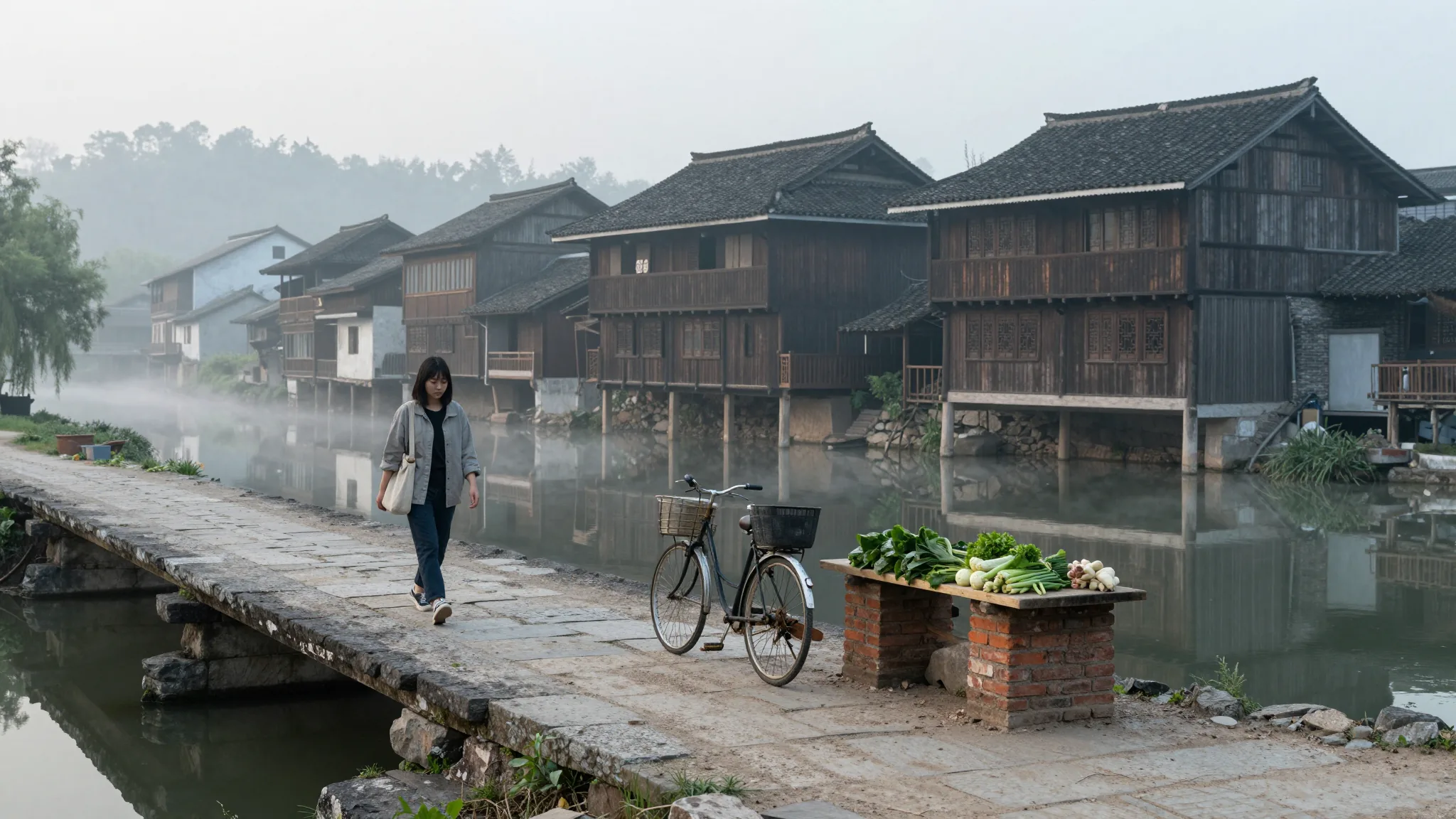
First, understand why Huangshi feels different from Quanzhou’s city center. Quanzhou itself was a medieval trading giant—Marco Polo’s “Zaitun.” But Huangshi, located about 20 kilometers southeast near the coast, was historically a fishing and stone-quarrying village. That means no fake “ancient town” ticket booths, but also no English signs. The principle is simple: come for texture, not for attractions. You’ll find narrow alleys where grandmas dry fish on bamboo trays, abandoned stone houses wrapped in fig vines, and a pier where local boats unload crabs at dawn.
Here’s your step‑by‑step game plan. Start early—take bus K902 from Quanzhou Passenger Transport Center Station (around 7 AM). It costs 5 RMB, takes 50 minutes, and drops you at Huangshi Old Street intersection. From there, walk east toward the sea. You’ll hit the first landmark within ten minutes: the **Chen Ancestral Hall**, a 19th‑century stone structure with faded dragon murals. Don’t just glance—walk inside the courtyard. Locals play chess there. Nod, smile, and they might offer you tea.
Keep walking east. The road becomes a stone path between two‑story houses. After 15 minutes, you’ll reach the **Huangshi Fishing Pier**. This is the soul of the area. Fishing boats bob in brown‑green water, ropes hang from rusty pulleys, and the smell of brine and diesel mixes with frying batter from a cart nearby. Stay for 20 minutes. Watch how fishermen mend nets—their hands move like machines.
Now for the best hidden spot: **Nanfeng Hill**. Not on any map. Ask a local shopkeeper “Nanfeng Shan?” and point upward. It’s a 15‑minute climb behind the village school. The trail starts behind a banyan tree with a small shrine. Halfway up, you’ll pass abandoned quarry pits turned into emerald pools. Don’t swim—sharp rocks below. At the top, a flat rock overlooks the entire Huangshi bay. You’ll see the modern container port to the left and the old stone village to the right. That contrast is the whole point of this trip.
Lunch is non‑negotiable: **Auntie Lin’s Seafood Noodle Shop** (no English name, look for the blue plastic stools on the corner of Pier Road). Order “hǎi xiān mǐ fěn” (seafood rice noodles) with extra clams. It costs 18 RMB. She pulls the clams from a bucket that arrived two hours ago. Eat it with pickled chili and watch the tide come in.
Afternoon: walk the **Huangshi Stone House Loop**. Start from the old well near the bus stop. Go north into the residential lanes. Every third house has a carved stone window grille—lions, lotuses, or geometric patterns. These were made by local quarrymen in the 1960s. Some doors are left open. Peek inside (respectfully) and you’ll see altars with fresh oranges and incense. No souvenir shops, no touts. Just life.
A real example: last month, a solo traveler from Shenzhen named Xiao Li followed this exact route. She arrived at 7:30 AM, got lost for 20 minutes near the bus stop, then asked a vegetable vendor for directions to the pier. The vendor walked her halfway. Xiao Li climbed Nanfeng Hill by 10 AM, had noodles at 11:30 AM, and spent two hours photographing stone carvings. She caught the 3:30 PM bus back. Her total spend: 56 RMB. Her takeaway: “Better than any ticketed ancient town—because nothing was staged.”
One warning: avoid Sundays. Local day‑trippers from Quanzhou crowd the pier, and Auntie Lin sells out by 12:30 PM. Go Tuesday through Thursday. Also, no hotel in Huangshi itself—stay in Quanzhou city (try the Jinjiang area) and day‑trip.
Practical wrap‑up: download offline Baidu Maps (Google Maps is unreliable here). Learn three phrases: “Duō shǎo qián?” (how much), “Zhè lǐ yǒu cè suǒ ma?” (is there a restroom), and “Xiè xie” (thank you). Carry small change—no WeChat pay at the noodle stall. And bring insect repellent; the hill has mosquitoes year‑round.
Huangshi won’t impress you with grand temples or light shows. It will reward you with the feeling of finding something real before it turns into a postcard. Go now, walk slowly, and leave nothing but the smell of salt on your clothes.
(Just returned from Huangshi last week. The Nanfeng Hill viewpoint is no joke—almost missed it because no signs. Climb past the banyan tree shrine, keep going. Absolutely worth the sweat.)
(Is it safe for a foreigner who speaks zero Chinese? I’m nervous about getting lost.)
(Yes, totally safe. I used Google Translate offline and pointed at my phone. People are super friendly. Just stick to the pier and stone house loop—don’t wander into the port area.)
(Auntie Lin’s noodle shop is a gem. I had the one with squid and pork. She gave me extra soup for free. Cash only, so don’t forget.)
(Compared to Xiamen, Huangshi feels like a time machine. No crowds, no EDM blasting from bars. Thanks for this guide—finally something honest.)
Summary: Real fishing village, no tourist traps. Climb Nanfeng Hill, eat pier noodles, go on a weekday.
FINISHED黄石旅游指南生成





Comments
Anonymous
try the Jinjiang area
Anonymous
no English name, look for the blue plastic stools on the corner of Pier Road
Anonymous
respectfully
Anonymous
around 7 AM
Anonymous
seafood rice noodles