Family travel fails not because destinations are difficult but because parents arrive unprepared for the specific, predictable problems that arise with children in tow. This guide identifies the most common breakdown points—packing chaos, behavioral meltdowns, budget overruns, and rigid itineraries—and provides concrete, tested solutions for each. The core principle is simple: address the root cause before departure, not after it manifests at the airport or hotel lobby.

Many families treat travel preparation as a generic task, packing what they usually pack and assuming children will behave as they do at home. This assumption is the single largest source of avoidable stress. The practical difference between a smooth family trip and a stressful one is not luck;
it is the degree to which parents have anticipated specific failure modes and built countermeasures into their pre-travel routine. The following sections break down each problem, explain why it happens, outline the risks if left unaddressed, and provide step-by-step actions you can take today.

Family Travel Problem-Solving Starts at Home: Why Packing Chaos Destroys the Journey Before It Begins
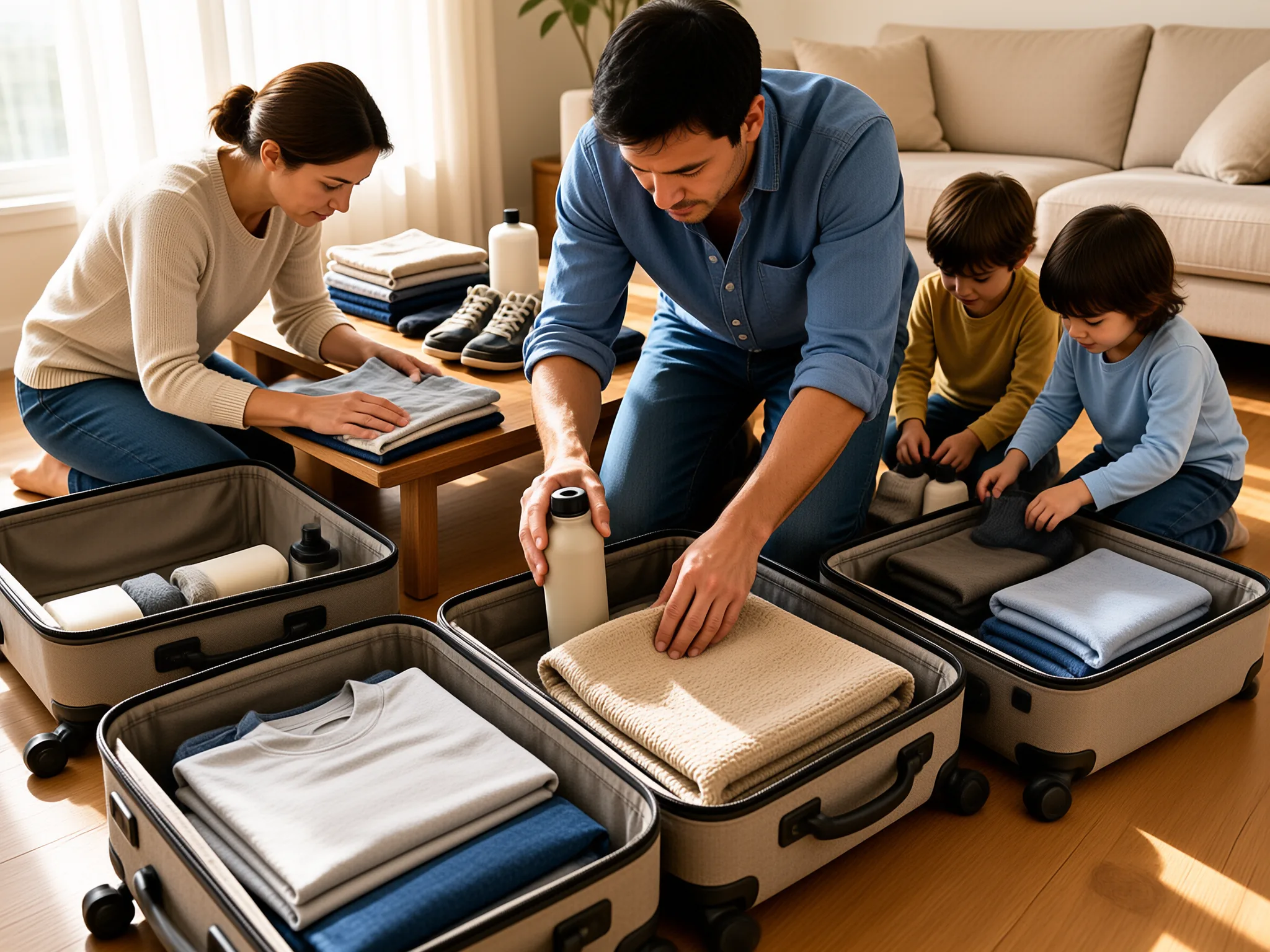
The most frequent source of family travel stress is not the destination itself but the disorganized departure. Parents often pack in a single frantic session, forgetting critical items, overpacking others, and creating bags that are impossible to manage at check-in or in transit. The root cause is a lack of systematic preparation: without a categorized checklist, items get missed or duplicated, and the stress of the packing process itself sets a negative tone for the entire trip.

The risk of unstructured packing extends beyond forgotten toiletries. Overpacked bags lead to excess fees, underpacked bags lead to mid-trip purchases at inflated prices, and disorganized luggage means lost items are impossible to locate quickly. To solve this, parents should build a three-category checklist: essentials that cannot be replaced (documents, medications, chargers), comfort items for children (favorite blanket, snacks, entertainment), and situational items based on destination climate and activities. Include a basic first aid kit with common medications, bandages, and any prescription drugs your children need, along with copies of medical records and emergency contact information. Pack by category, not by room or person, and leave one bag compartment empty for return purchases.
How Do Parents Prevent Behavioral Meltdowns During Long Flights and Transfers?
Children do not behave poorly during travel because they are disobedient;
they behave poorly because they are overwhelmed by unfamiliar environments, disrupted routines, and sensory overload. A child who is well-behaved at home may cry for hours on a plane because the combination of confined space, noise, lack of movement, and inability to communicate needs creates genuine distress. The problem is environmental, not behavioral, and the solution must address the environment rather than punish the child.

prepare children for the journey before departure by showing them photos of the aircraft, train, or car they will use, explaining what they will hear, smell, and experience.
pack a dedicated travel comfort kit for each child containing noise-canceling headphones, a familiar snack, a small toy, and a coloring book—items that are not used at home and therefore retain novelty during travel.
schedule physical activity before and after long transit segments to release pent-up energy. Finally, set realistic expectations: plan for one behavioral incident per major transit leg and have a private exit strategy, such as moving to a quiet corner or stepping outside the terminal, so the disruption does not escalate into a public confrontation.
What Causes Family Travel Budgets to Blow Past Their Limits, and How Can Parents Stop It?
Family travel budgets fail for a predictable reason: parents estimate costs based on adult-only assumptions and ignore the multiplier effect of children on every expense category. A hotel room that accommodates two adults may cost double when two children require an extra bed. A restaurant that serves four adults at a reasonable price may charge premium for children’s meals, high chairs, and special dietary needs. A car rental that fits two adults may require a larger, more expensive vehicle when three child safety seats are needed.
To prevent budget overruns, parents should build their travel budget using a child-multiplier model: take each expense category and multiply by a factor that accounts for children’s specific needs. For lodging, add 40 to 60 percent to the base room rate. For food, add 30 percent per child. For transportation, add the cost of child safety seats and any additional vehicle capacity. Once the realistic budget is established, create a daily spending cap and track expenses in real time using a shared spreadsheet or budgeting tool. The key is not to spend less overall but to spend with full awareness of where every dollar goes, which eliminates the shock of discovering at the end of the trip that the budget was exhausted on day three.
How to Balance a Structured Itinerary with the Flexibility Families Actually Need
The final and most insidious family travel problem is the rigid itinerary. Parents who book every activity, restaurant, and museum in advance create a schedule that assumes children will cooperate, stay on time, and maintain interest throughout the day. In reality, children get tired, bored, hungry, and overwhelmed at unpredictable moments, and a rigid itinerary turns these natural needs into conflicts. The result is a trip where adults spend more energy enforcing the schedule than enjoying the destination.
The solution is a two-tier itinerary structure. Book and confirm only the non-negotiable items: flights, hotel check-in times, and one or two must-see attractions that cannot be rescheduled. For everything else, create a wish list of options organized by energy level—high-energy activities for the morning, low-energy activities for the afternoon, and rest blocks for the late afternoon when children are most likely to crash. Build in at least one completely unplanned day per week of travel, where the only rule is to follow the children’s lead. This approach preserves the benefits of advance planning—confirmed reservations, known costs, reduced decision fatigue—while giving families the flexibility to respond to the unpredictable reality of traveling with children. The practical outcome is a trip where parents feel in control of the overall experience without being enslaved to a minute-by-minute schedule that no child will ever follow.